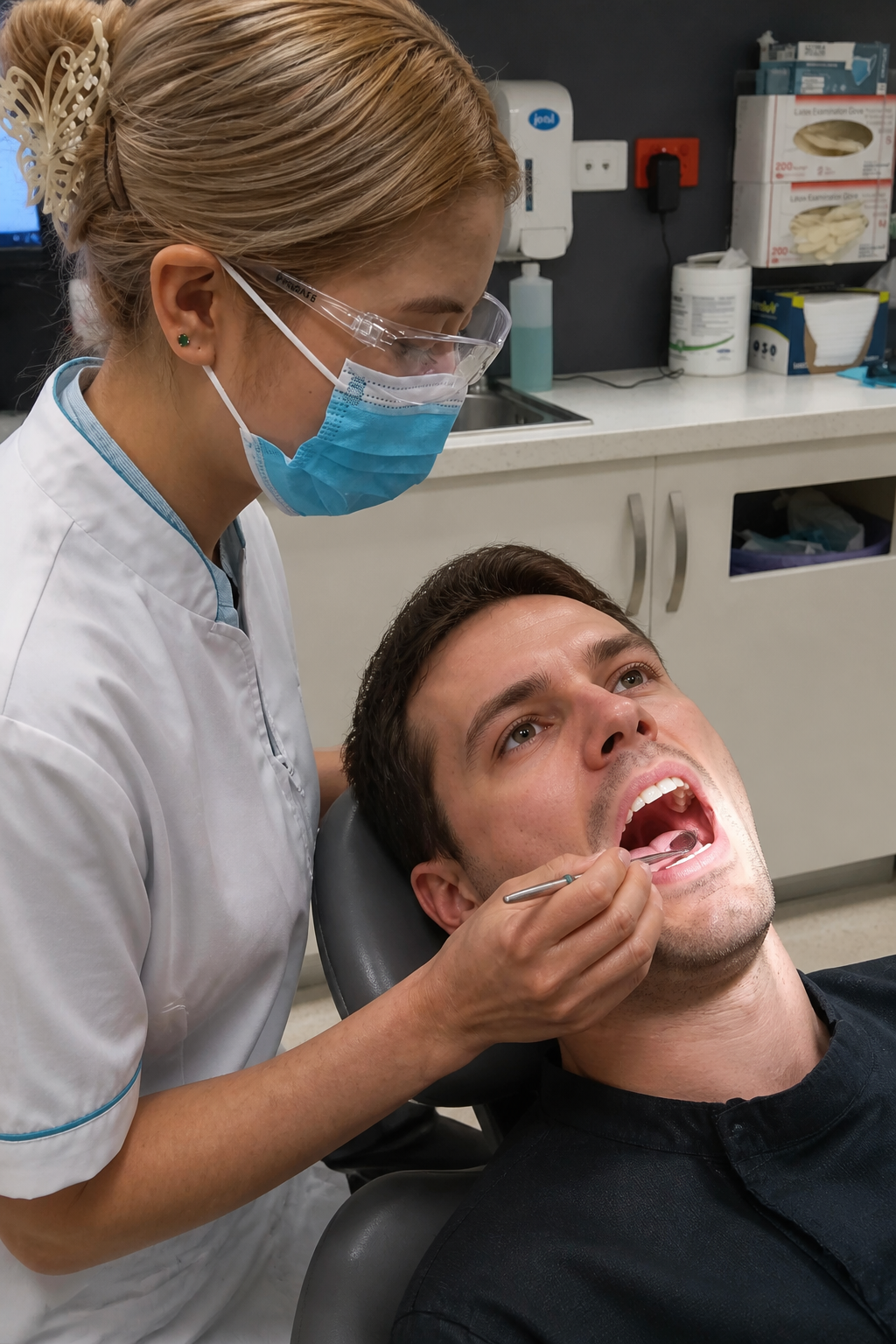
Restorative dentistry
Crowns & Bridges in Parap — Restore Broken Teeth, Replace Missing Ones
Custom-made restorations that protect damaged teeth and fill the gaps — with a written, itemised quote before anything starts.
Crowns and bridges at Compass Dental Care in Parap rebuild teeth that are cracked, broken, or heavily filled, and replace missing teeth using the neighbouring teeth as support — each one custom-made by an Australian dental lab to restore strength, function, and a natural appearance.
What a crown is — and when you need one
A dental crown is a custom-made cap that fits over a tooth, restoring its shape, size, and strength while protecting what remains underneath. It is one of the most reliable ways to save a tooth that has been weakened but does not need to be removed.
Your dentist at Compass Dental Care may recommend a crown when a tooth is cracked or broken, when a large old filling has left too little healthy structure to hold another filling safely, after root canal therapy has left a tooth more brittle, or when teeth have become badly worn. In each case the goal is the same: reinforce the tooth so it can handle everyday chewing again, rather than letting a small problem grow into a lost tooth.
Because a crown wraps around the whole visible portion of the tooth rather than filling a single cavity, it spreads the force of biting more evenly and holds the remaining structure together. That is why a crown is often the recommended step after a root canal or a significant crack, where a plain filling would be at risk of chipping or splitting the tooth further.
What a bridge is — and when it suits
A bridge replaces one or more missing teeth by anchoring a replacement tooth (or teeth) to the healthy teeth on either side of the gap. Those neighbouring teeth are prepared and crowned, and the replacement tooth sits between them — literally bridging the space.
A bridge can be a good option when you are missing a tooth and the teeth beside the gap are strong enough to provide support. It fills the space so the surrounding teeth are less likely to drift, restores your ability to chew evenly, and returns a natural look to your smile. For some patients a bridge is a straightforward alternative to an implant or a removable denture — we will help you weigh which path fits your mouth and your priorities.
The process, step by step
Assessment and planning
We examine the tooth or gap, take any X-rays needed, and talk through your options. You leave this stage with a written, itemised quote — no treatment begins without your approval.
Preparing the tooth
Under local anaesthetic, the tooth is gently shaped so the crown can fit over it. For a bridge, the teeth on either side of the gap are prepared in the same way.
Impression or digital scan
A precise impression or digital scan captures the exact shape of your teeth and bite. This is sent to an Australian dental lab, where your restoration is custom-made.
Temporary crown
While the lab crafts your permanent restoration — usually around two weeks — you wear a temporary crown so the prepared tooth is protected and you can eat and smile comfortably in the meantime.
Fitting the permanent restoration
At your final visit, the temporary is removed and the permanent crown or bridge is checked for fit, bite, and colour, then bonded into place and polished.
Materials and a natural appearance
Crowns and bridges can be made from porcelain, metal, or a combination of the two. Porcelain (non-metallic) restorations are prized for their natural, tooth-like appearance and are colour-matched to blend with the teeth around them. Metal and metal-backed options can offer extra strength for teeth under heavy chewing load, such as back molars.
There is no single right material for everyone — your dentist will recommend an option based on which tooth is involved, how much bite force it takes, and how visible it is when you smile. The aim is a restoration that is both durable and discreet.
Crown, bridge, or implant — making the choice
When a tooth is damaged but savable, a crown protects it. When a tooth is missing, the decision is usually between a bridge and an implant. A bridge is often quicker and avoids surgery, but it relies on preparing the neighbouring teeth. An implant leaves those neighbours untouched and replaces the tooth at the root, but it takes longer and involves a surgical step.
Both are proven ways to close a gap, and the right fit depends on your gum and bone health, the condition of the surrounding teeth, your timeframe, and your budget. We will lay out the trade-offs plainly so you can make an informed decision — and if you are leaning toward the root-level approach, our dental implants page explains that route in more detail.
Costs and what to expect
Fees depend on the tooth, the material chosen, and your individual case. As a guide, our porcelain (non-metallic) crowns start from $2,402, and crowns overall range from $767 for an acrylic crown to $2,541 for a metallic crown. A provisional (temporary) crown is $448. A bridge involves multiple units, so it is quoted per case in writing rather than at a single fixed price.
Whatever your treatment, you will receive a written, itemised quote before anything proceeds, and we process health fund claims on the spot with HICAPS so you only pay the gap on the day.
Caring for your crown or bridge
A crown or bridge is looked after much like your natural teeth: brush twice a day, clean between your teeth daily (a bridge benefits from flossing underneath with a floss threader or interdental brush), and keep up your regular check-ups. With good care and routine reviews, crowns and bridges can last many years — though longevity varies from person to person depending on bite, diet, gum health, and habits such as grinding.
Patients from across Parap and the wider Darwin area come to us to restore damaged and missing teeth. If a tooth is cracked, broken, heavily filled, or missing, an assessment is a sensible first step toward the right restoration for you.
Frequently asked questions
Crown or filling — when do I need a crown?
A filling replaces a small area of lost tooth structure, while a crown caps and reinforces a tooth that has lost too much structure to hold a filling safely — for example a cracked or broken tooth, a tooth with a very large old filling, or one that has had root canal therapy. Your dentist will assess how much healthy tooth remains and recommend the option most likely to protect it. Individual results vary.
How long does a crown take?
Because each crown is custom-made by an Australian dental lab, the process usually spans about two weeks across two visits. At the first visit the tooth is prepared and an impression or digital scan is taken, and you leave with a temporary crown. At the second visit the permanent crown is fitted and adjusted. Your dentist will confirm the timeline for your case.
Bridge or implant?
Both replace missing teeth, and the right choice depends on your situation. A bridge uses the neighbouring teeth as support, so it does not require surgery and is often quicker — but it involves preparing those adjacent teeth. An implant replaces the tooth at the root and leaves the neighbours untouched, though it takes longer and involves a surgical step. We will talk through the trade-offs, your gum and bone health, and the costs so you can decide with clear information.
Will it look natural?
Modern porcelain crowns and bridges are shaped and colour-matched to blend with your surrounding teeth, so most people cannot tell which tooth has been restored. Where strength is the priority — such as a back molar under heavy chewing load — your dentist may discuss metal or metal-backed options and how they balance durability with appearance.
How long do crowns and bridges last?
With good oral hygiene and regular check-ups, crowns and bridges can last many years. Longevity depends on your bite, gum health, diet, and habits such as grinding, so results vary from person to person. Keeping up your six-monthly visits lets us monitor the restoration and the teeth supporting it.
Related services
Any surgical or invasive procedure carries risks. Individual results vary. Before proceeding, you should seek a second opinion from an appropriately qualified health practitioner.
Cracked, broken, or missing a tooth?
Book an assessment at Compass Dental Care. We'll examine the tooth, explain whether a crown or bridge suits, and give you a written, itemised quote before anything proceeds.