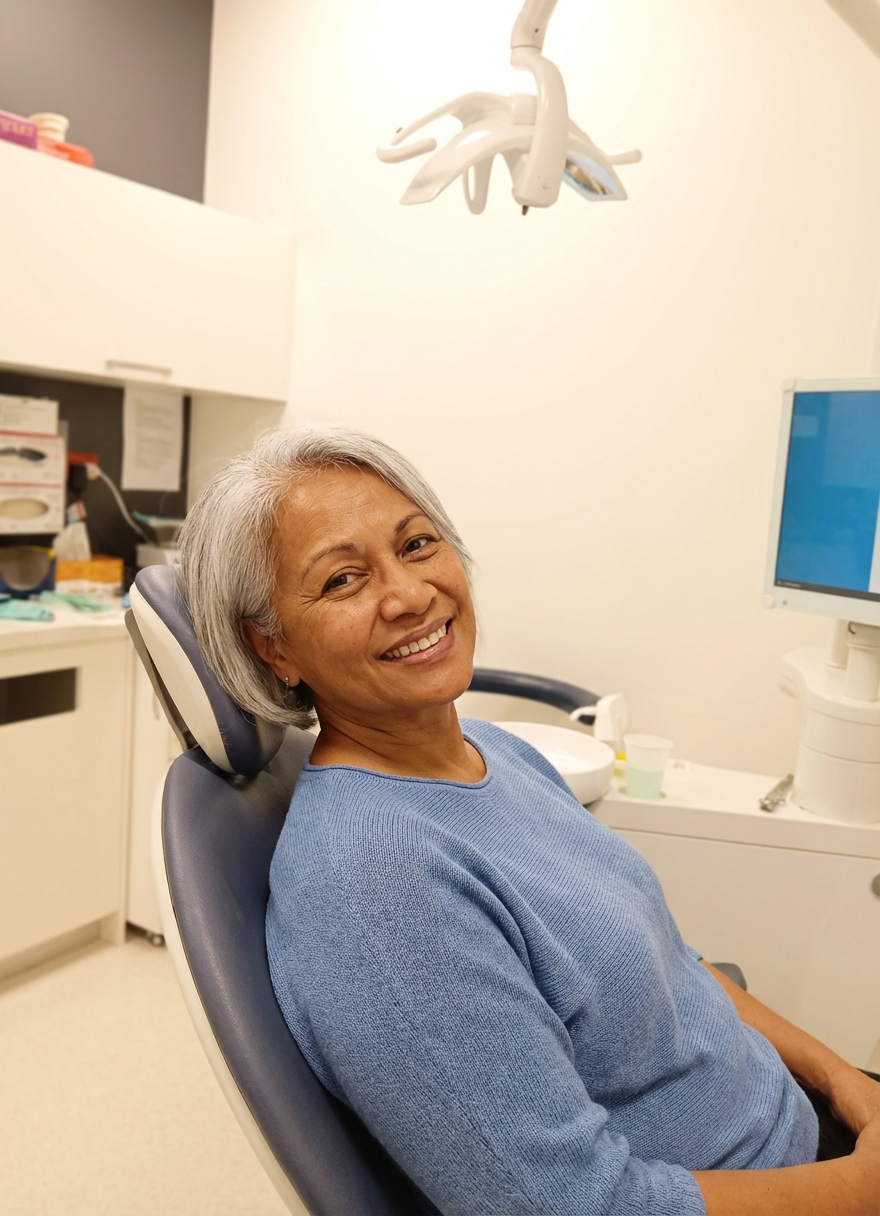
Clear aligners
Clear Aligners in Parap — Straighten Teeth Discreetly
Near-invisible, removable Spark aligners — planned and monitored by your dentist, not ordered from a website.
Clear aligners at Compass Dental Care in Parap straighten teeth using a series of near-invisible, removable trays — a discreet alternative to metal braces, planned and monitored by your dentist so you can address crowding or spacing without the look of traditional wires.
What clear aligners are and how they work
Clear aligners are a series of custom-made, near-transparent plastic trays that gradually move your teeth into a straighter position. Each tray is shaped slightly differently from the last, so wearing them in sequence nudges your teeth along a planned path — a modern, low-profile alternative to the fixed brackets and wires of traditional braces.
At Compass Dental Care we use Spark Clear Aligners. You wear each set for roughly 20 to 22 hours a day, taking them out only to eat, drink anything other than water, and clean your teeth. Roughly every fortnight you move to the next set in the series, and your teeth keep tracking toward the final result your dentist has planned. Because the trays are removable, there are no food restrictions and cleaning your teeth stays simple.
Consistency is what makes aligners work. Because you can take them out, the responsibility to wear them for the full 20 to 22 hours sits with you — the teeth only move while the trays are in. For motivated patients that flexibility is a genuine advantage over fixed braces; for those who suspect they'd struggle to keep them in, it's an honest conversation worth having before you start.
Spark aligners versus traditional braces
Metal braces are effective and, for some cases, still the right choice — but they are visible, fixed in place, and can make brushing and flossing harder. Clear aligners answer a different set of priorities for the many adults and older teenagers who want to straighten their teeth without announcing it to the world.
Discreet
Spark trays are near-invisible in normal conversation, so most people won't notice you're wearing them at work or in photos.
Removable
You take them out to eat and to clean your teeth, which means no wires to trap food and no change to your daily routine at mealtimes.
Comfortable
With no brackets or wires, aligners avoid the rubbing and mouth ulcers some people get with fixed braces. You'll feel gentle pressure when you start a new set, which usually eases within a day or two.
Who clear aligners suit — and who they don't
Clear aligners work best for mild-to-moderate cases: crowded teeth, gaps and spacing, or relapse where teeth have drifted back after braces years ago. If that describes your situation, aligners are often an excellent fit and can deliver a noticeable change discreetly.
We believe in honest scoping. More complex bite problems — significant jaw discrepancies or severe crowding, for example — may be better treated with traditional braces or referred to an orthodontist. If aligners aren't the right tool for your case, we'll tell you plainly rather than start a treatment that can't deliver. Individual results and treatment times vary, and the only way to know what's realistic for you is a proper assessment.
The dentist-supervised process
Clear aligner treatment at our Parap practice is planned and monitored from start to finish by a dentist — not left to a tray and a set of instructions in the post.
Digital scan and assessment
We examine your teeth, gums, and bite, then take a digital scan of your mouth. That scan lets us plan the tooth movements and often show you a preview of the likely outcome before you commit. You leave with a written, itemised quote and plan.
Your aligners and reviews
Your custom Spark trays are made to the plan. You work through the series at home, and we review your progress at scheduled visits to check the teeth are tracking as intended and to make any adjustments.
Retention afterwards
Once your teeth reach their final position, a retainer holds them there. Teeth naturally tend to drift over time, so wearing your retainer as directed is what protects the result you've worked for.
Why dentist-monitored beats mail-order
DIY and mail-order aligner kits are cheaper because they skip the part that keeps you safe: the in-person examination. Moving teeth is a clinical procedure. Without first checking the health of your gums, the roots of your teeth, and your bite, tooth movement can cause loosening, gum problems, or bite issues that are costly to fix.
Because your treatment is planned and supervised by a dentist who sees you in the chair, problems can be caught early and the plan adjusted. That oversight is the core difference between professional clear aligner treatment and a kit ordered online — and it's why we only offer aligners the dentist-monitored way.
Clear aligners at a family-owned Parap practice
Compass Dental Care has looked after families across Parap and the wider Darwin area for more than ten years. Being family-owned means you see the same team through your treatment — the people who scanned your teeth and mapped your plan are the ones who review your progress and fit your retainer at the end.
That continuity matters with aligners, because the result depends on the plan being followed and checked over many months. When you have a question about a tray that doesn't seem to be seating, or you're not sure you're on track, you're talking to a practice that knows your case rather than a call centre. If you're weighing up straighter teeth, the sensible first step is a proper assessment — book a clear aligner consultation and we'll show you honestly whether it's the right option for you, and exactly what it involves. Individual results and treatment times vary.
Frequently asked questions
Are clear aligners as good as braces?
For mild-to-moderate crowding, spacing, or relapse after old braces, clear aligners can achieve comparable results to fixed braces while being far less visible. More complex bite problems may still be better treated with traditional braces or referred to an orthodontist — your dentist will tell you honestly at the assessment which option suits your case. Individual results and treatment times vary.
How long does treatment take?
Treatment times vary with the complexity of your case. Milder cases can finish in several months, while more involved cases may take up to around 18 months. You wear each set of trays roughly 20–22 hours a day and change to the next set approximately every fortnight, following the plan your dentist maps out.
Are clear aligners painful?
Most people feel mild pressure or tightness for a day or two when they start a new set of trays — a sign the teeth are moving. It is generally manageable and settles quickly. Because there are no brackets or wires, aligners avoid the poking and ulcers that some people experience with fixed braces.
Aligners vs mail-order kits — what is the difference?
Mail-order or DIY kits skip the in-person examination. With us, a dentist assesses your teeth, gums, and bite before anything begins, takes a digital scan, plans the movements, and reviews your progress along the way. That supervision matters: moving teeth without checking gum and root health first can cause harm. Professional, dentist-monitored treatment is the safer path.
How much do clear aligners cost?
Spark clear aligners for a single arch (upper or lower) at Compass Dental Care range from $4,500 to $5,500, and both arches from $8,500 to $9,700 — including your consultation, records, and treatment. After your assessment you receive a written, itemised quote and treatment plan so you know the exact figure before deciding.
Related services
Any surgical or invasive procedure carries risks. Individual results vary. Before proceeding, you should seek a second opinion from an appropriately qualified health practitioner.
Thinking about straighter teeth?
Book a clear aligner assessment at Compass Dental Care. We'll scan your teeth, show you what's possible, and give you a written plan and quote — no pressure, just clear information.